





















































Power Connectors
Filter
Sort by:






Power connectors: when an off-the-shelf cable isn't enough
Loose connectors are used when you need to build a custom connection: a specific cable length, a socket to mount on a panel or box, an extension cord repair, or an adapter that doesn't exist on the market. The choice is based on three criteria: inline or panel-mount, male or female, and operating current and voltage.
Inline or panel-mount
The inline connector is mounted on the cable: it has a cable gland that grips the sheath and prevents strain from reaching the contacts. The panel-mount connector is fixed to a surface—rack front, box, cabinet, wall—and stays stationary while the cable is inserted and removed. These are two different products, even when the contact designation is the same.
Selection table
| What you need to do | Connector |
|---|---|
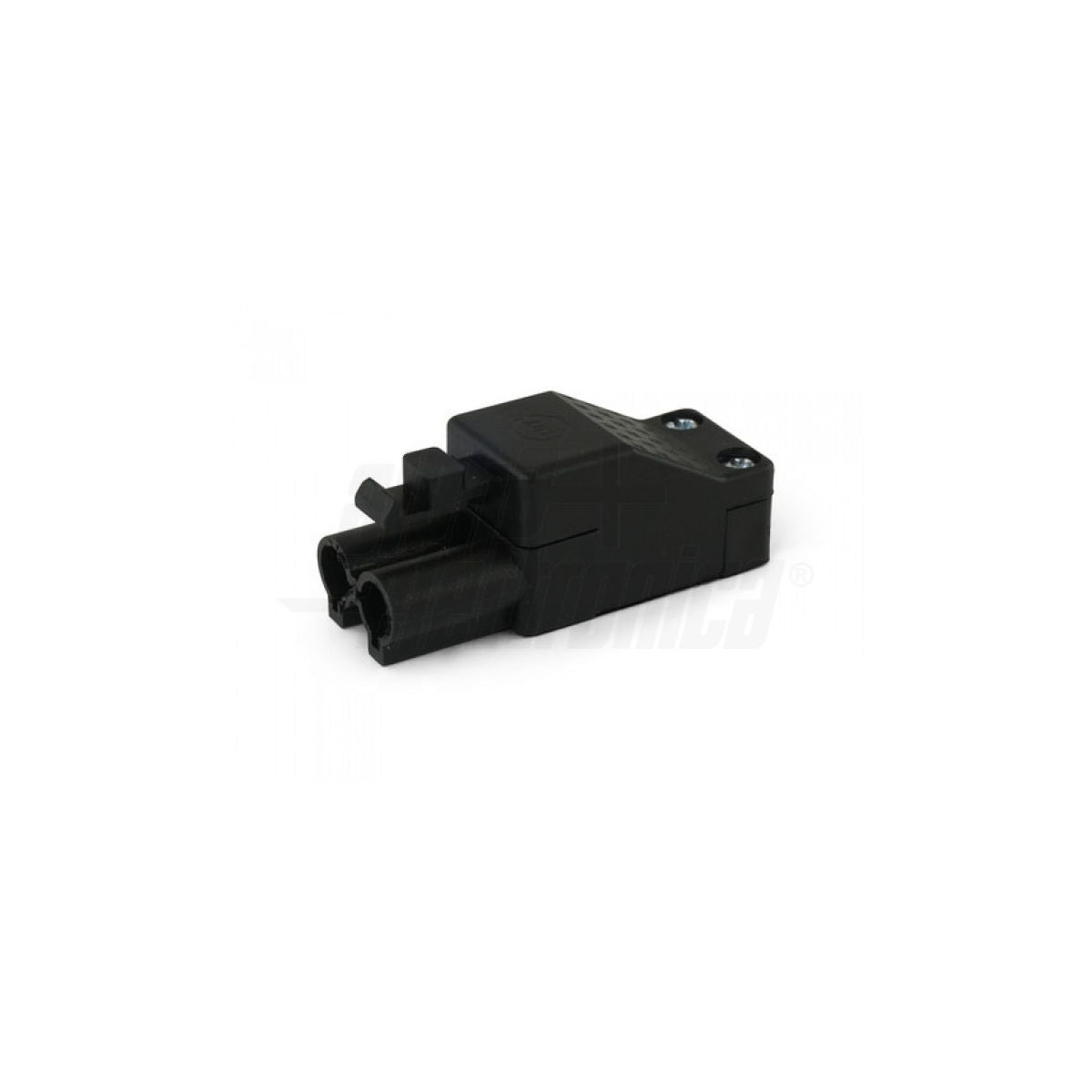
| Build or repair an extension cord for audio, lighting, or service systems | Mazzeri 16A 500V anti-pullout inline plugs and sockets, 2 or 3 pole, with cable gland |
| Bring power to the front of a cabinet or box | IEC 320 (C19, C20) panel-mount sockets and plugs or three-pole terminal blocks |
| Create a custom IEC cable for UPS or racks | C19 female inline socket, C20 male inline plug |
| Replace the connector on a high-temperature appliance | C15 inline socket, identifiable by the center groove |
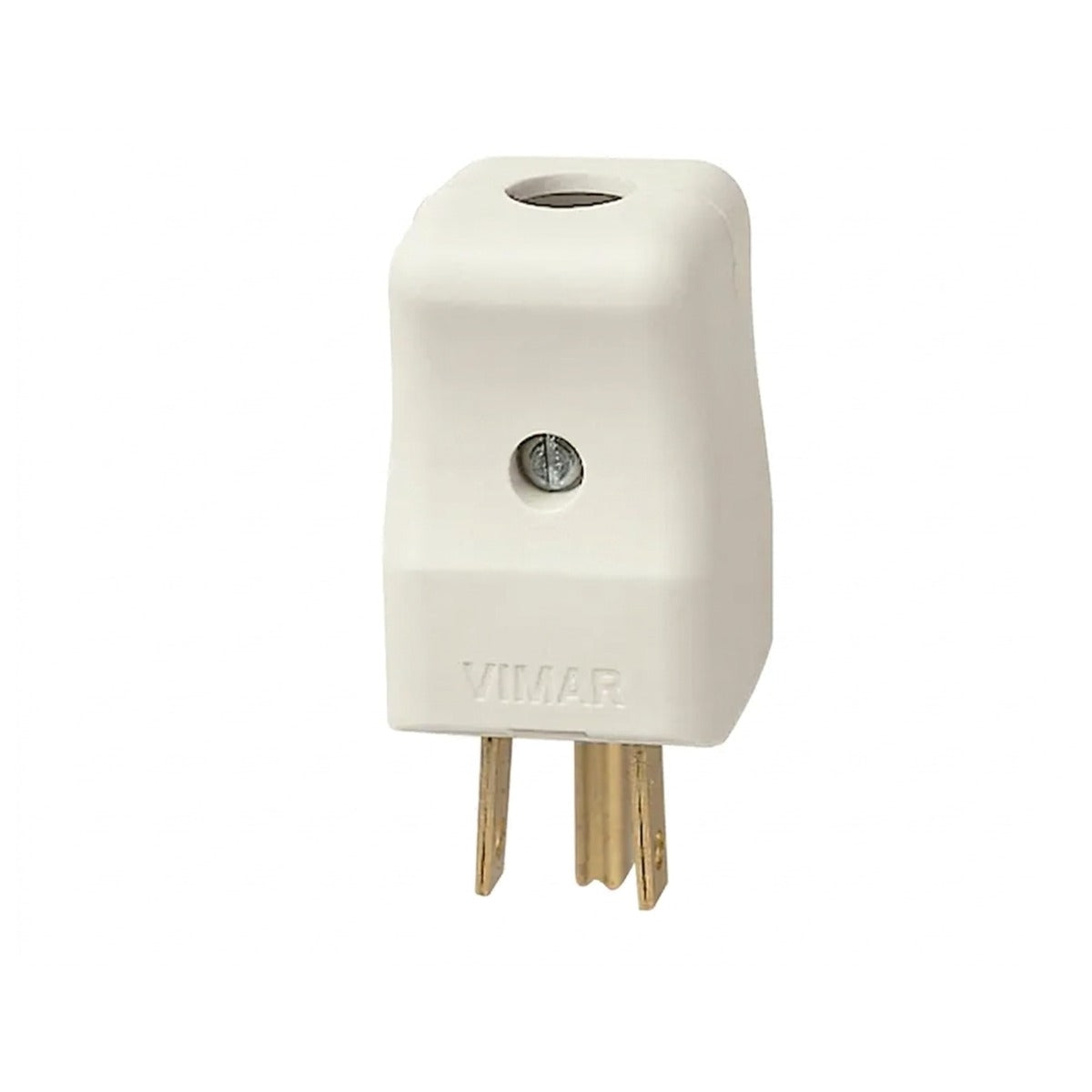
| Wire an appliance imported from the United States | American 2 or 3 pole plugs and sockets, 15A 125V |
| Power a camera from a power supply with screw terminals | DC 5.5 × 2.1 and 5.5 × 2.5 mm adapters on screw or push-in terminals |
| Join multiple conductors in a box | Modular terminal strip, cuttable to the required number of poles |
The C15, C19, C20 codes: what changes
The same rules as IEC 60320 cables apply: odd numbers are female connectors (C15, C19), and even numbers are male plugs (C20). The C15 is distinguished from the common C13 by a groove on the housing and is intended for appliances operating at higher temperatures: a C13 will not fit into a C16 socket designed for the C15. The C19/C20 pair is the 16A type for UPS, PDUs, and power equipment. For pre-assembled cables, see power connection cables.
Expert advice. A rule that saves you from serious mistakes: the male plug should always be on the side receiving power, and the female socket on the side supplying it. If you mount a male plug at the end of a cable connected to the mains, you end up with two live poles that are accessible with a finger. This is the most dangerous error we see on DIY extension cords, and it happens more often than you would think. Also, verify that the cable gland truly grips the outer sheath and not just the individual conductors.
IP20: where they can be used
Connectors with an IP20 protection rating are protected against access to live parts with a finger, but not against water: they must be used exclusively in dry, indoor environments. For outdoor use, construction sites, gardens, or damp environments, you need connectors with an appropriate protection rating, such as IP68 waterproof connectors.
Frequently Asked Questions
What does "anti-pullout" mean?
It means that once the connector is plugged in, it won't come loose due to accidental pulling on the cable: there is a mechanical retention system. This is why these connectors are the standard in audio, lighting, and service systems, where cables are constantly stepped on and pulled.
Can I use a 16A connector on a 10A circuit?
Yes: the indicated value is the maximum allowed current, so an oversized connector will work safely. The opposite is not true: using a 10A connector where 16A is flowing will cause it to overheat, which is exactly how electrical fires start.
How do I choose the cable gauge to connect?
Based on the current that needs to flow and the length of the run, not on the cable gland diameter. Also, verify that the sheath falls within the clamping range of the gland: a cable that is too thin will not be locked, and the strain will reach the contacts.
What are the DC terminal adapters for cameras used for?
They are for connecting a power supply with terminal outputs (or a cut-to-length cable) to the standard cylindrical connector of cameras without soldering. Pay attention to the two sizes: 5.5 × 2.1 mm and 5.5 × 2.5 mm look similar but are not interchangeable, and pay attention to polarity, which in almost all cases is positive in the center.
Do I need an electrician to mount them?
For work on 230V circuits, yes. Low-voltage wiring on disconnected devices is within the reach of anyone with manual skills, but any work on the fixed electrical system must be performed by qualified personnel.





