




















































Staubli brand products
Filter
Sort by:
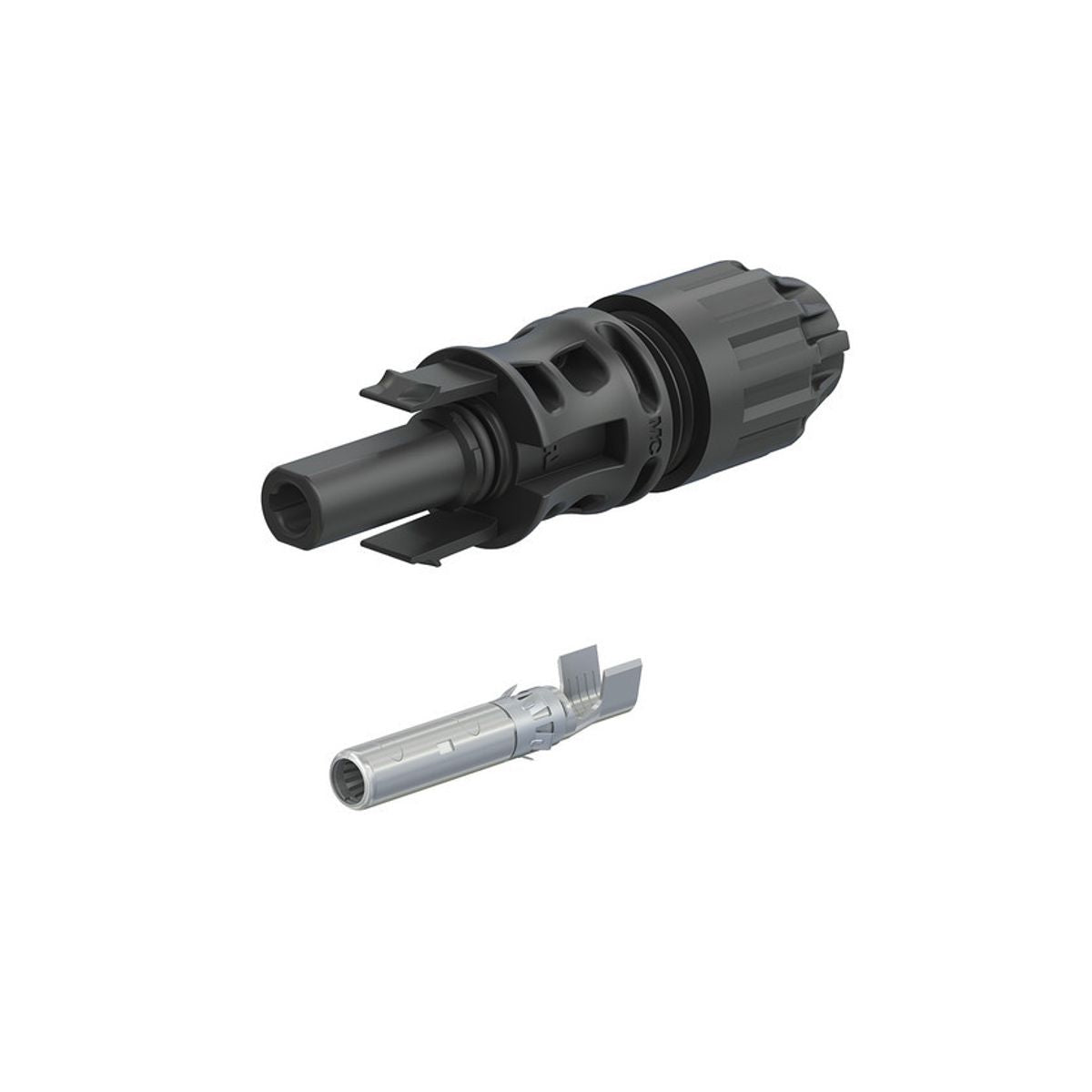
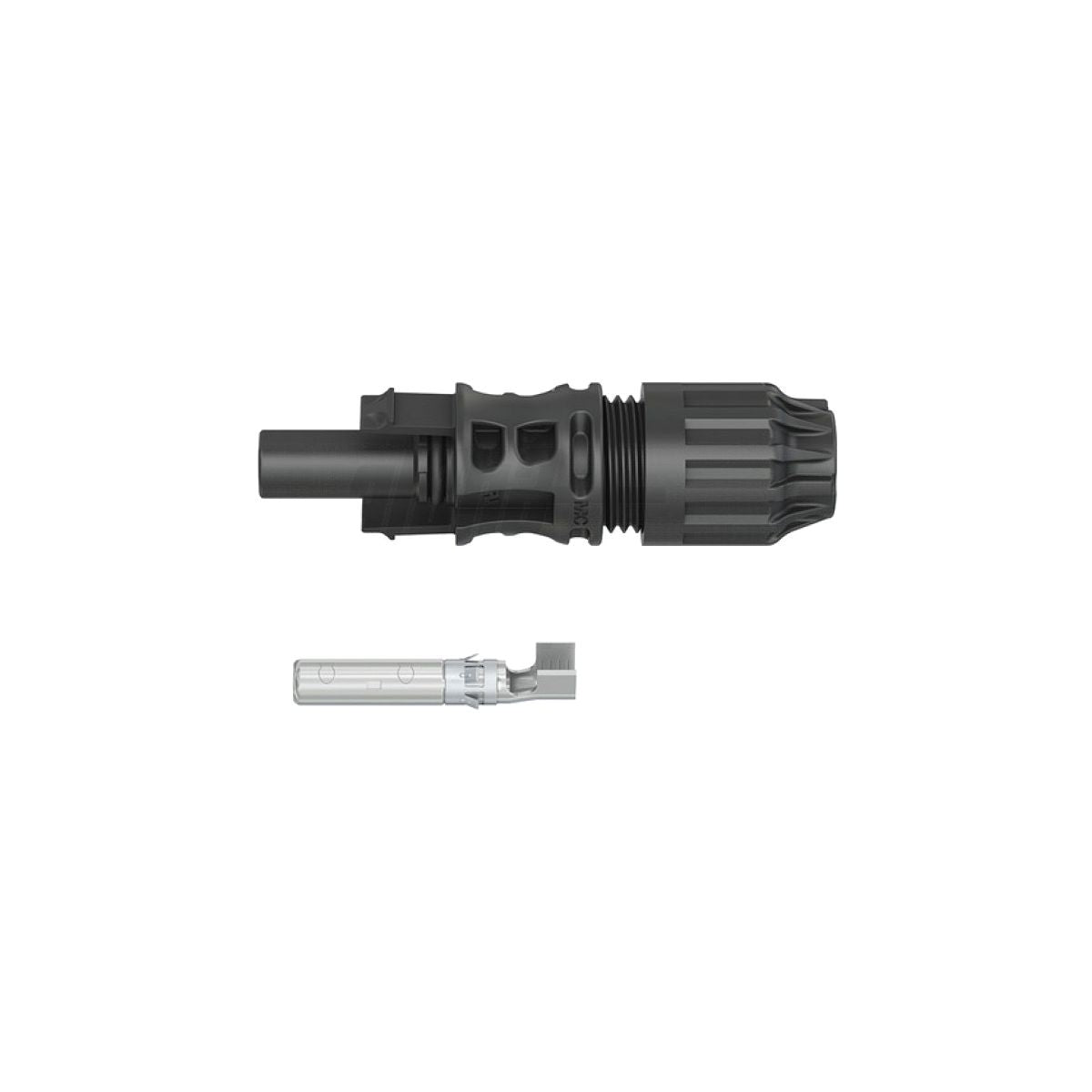


Stäubli: the original MC4 connectors
Stäubli is the company that developed the MC4 connector, the de facto standard for photovoltaic DC wiring. When you read "MC4" in a specification, it refers to these. The current series is the MC4-Evo 2, rated up to 1500V and available in two current ratings based on the cable cross-section.
Selection table
| Series | Current | Voltage | Cable cross-section |
|---|---|---|---|
| MC4-Evo 2 | 53A | 1500V | 4–6 mm² |
| MC4-Evo 2 | 69A | 1500V | 10 mm² |
| MC4 previous series | 45A | 1000V | 10 mm² |
Connectors must be ordered in pairs: each connection requires a male and female half, and positive and negative are two separate circuits. Count the actual terminations before ordering.
Why you should not mix brands
This is the most important rule of photovoltaic wiring, and Stäubli itself reiterates it. Even when a connector from another manufacturer mechanically fits into an MC4, tolerances, contact materials, and gasket geometry are designed to mate with their own counterpart. A mixed connection generates contact resistance: resistance means heat, and on a DC circuit that works every day for twenty years, that point becomes a failure. It is the most documented cause of DC wiring problems.
The same applies to tools: crimping must be performed with the correct crimping tool and the correct cross-section die.
Pro tip. The cable cross-section must be verified before ordering the connector, not after: the contact for 4–6 mm² and the one for 10 mm² are different parts, and a contact crimped on the wrong cross-section will not hold either mechanically or electrically. Also, pay attention to the difference between 1000V and 1500V: these are different ratings and must be respected based on the maximum string voltage calculated in the design. One last thing: strings are live whenever there is light, so any work on the DC side must be performed by a qualified installer.
Frequently Asked Questions
What is the difference between MC4 and MC4-Evo 2?
The Evo 2 is the evolution of the series, rated for voltages up to 1500V and higher currents. The two series should not be coupled with each other: use the same series on both sides of the connection.
Can I pair them with "MC4-compatible" connectors?
This is not best practice. The manufacturer and industry standards require pairing connectors of the same series and from the same manufacturer, because only then are the seal, contact resistance, and declared rating guaranteed.
What tool is needed?
A specific crimping tool for photovoltaic contacts, with dies corresponding to the cross-section. Generic pliers deform the contact without ensuring the required tightness, and this is a defect that is not visible to the naked eye but emerges over the years.
What does IP65 mean for these connectors?
Total protection against dust and resistance to water jets from any direction, once properly mated and closed. The seal depends on the assembly: cable gland tightened on the sheath, cable of the expected diameter, and connector fully engaged.
Are they suitable for H1Z2Z2-K solar cable?
Yes, this is the cable for which they were created. Just verify the correspondence between the cable cross-section and the contact: 4–6 mm² or 10 mm². You can find the cable in the solar cable section.
See also photovoltaic connectors, photovoltaic panels, and inverters.





