


























Leuci brand products
Filter
Sort by:


Leuci: incandescent lamps for uses where LED does not work
The Leuci incandescent lamps in our catalog are not a nostalgic choice: they are spare parts for fixtures that an LED cannot replace. An oven bulb works at 300 degrees, a temperature at which the electronics of an LED are destroyed. A salt lamp needs heat to warm the block and function. Frosted spheres and silvered crown bulbs are used on dimmable decorative fixtures, where old regulators do not handle LED loads.
What you'll find in the range
| Lamp | Base and power | Usage |
|---|---|---|
| Oven bulb 300° | E14 15W | Domestic and professional ovens, resistant to high temperatures |
| T25 bulb for salt lamps | E14 25W | Himalayan salt lamps, small diffusers |
| Frosted sphere | E27 25W | Wall lamps, vanity lights, decorative fixtures |
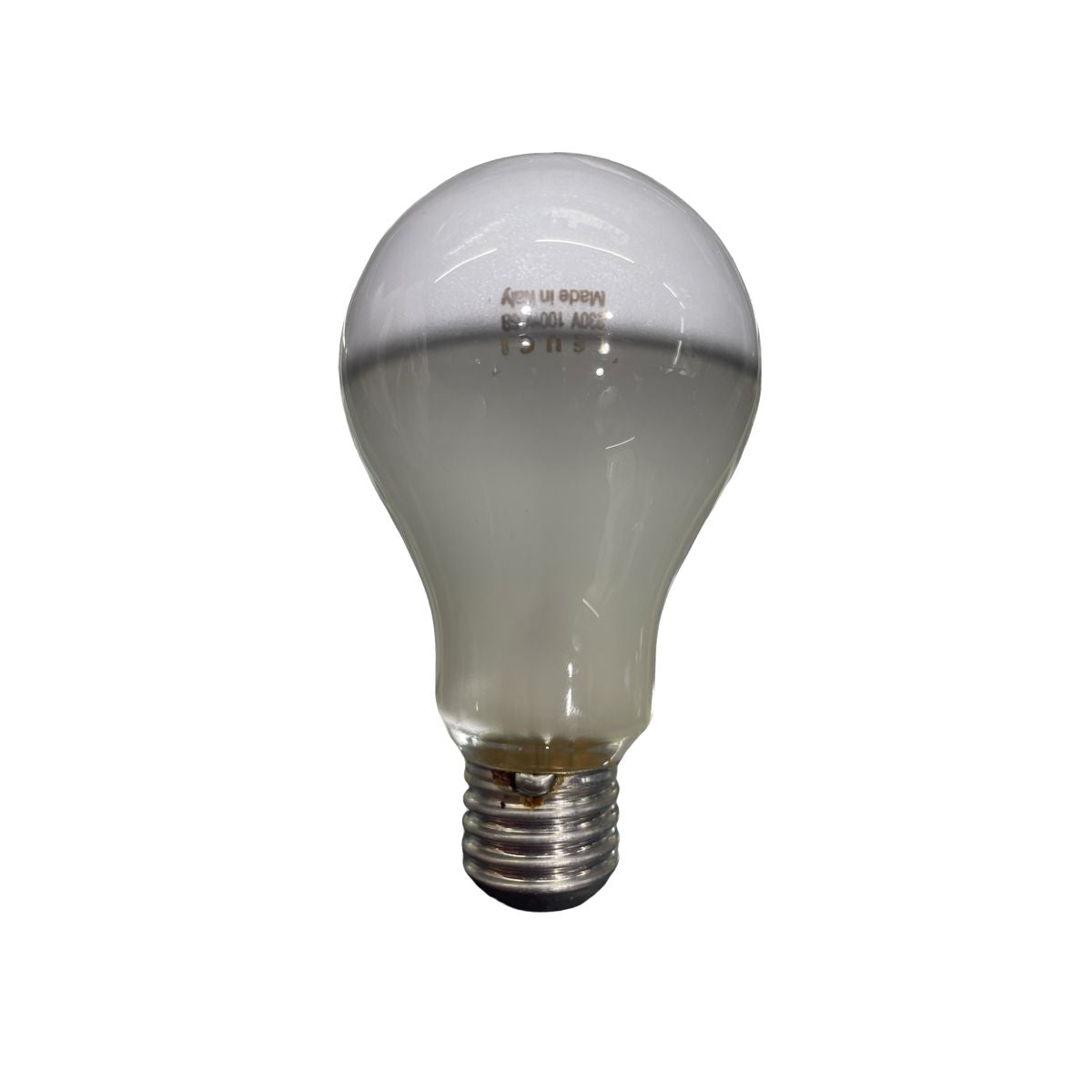
| Dimmable silvered crown | E27 100W | Pendants and design lamps with reflected upward light |
The silvered crown is not a defect
The mirrored cap on the top of the bulb serves to shield the direct view of the filament and reflect the light upward or towards the fixture's reflector. It is the bulb intended for several design lamps with shades open at the bottom, where a normal bulb would glare at those sitting underneath. If your fixture uses one, do not replace it with a clear bulb: it completely changes the lighting effect.
Pro tip. For the oven bulb, always check the base and dimensions relative to the socket compartment: E14 is the most common standard but some ovens use E27, and the protective glass sometimes leaves only a few millimeters of margin. And remember that salt lamps are not turned off for fashion: without the heat of the bulb, the salt does not work and condensation forms on the surface. Those who buy them for continuous decorative use should keep a spare, because these lamps are on for many hours a day.
Frequently Asked Questions
Can incandescent lamps still be bought?
Yes, as discontinued items and while stocks last. The European Union's ecodesign framework has progressively removed various types from the market, but the sale of existing stock remains permitted, and for some special uses—ovens, fixtures requiring heat—they remain the only technically valid solution.
Can I put an LED in the oven?
No. Oven bulbs are designed to withstand temperatures around 300 degrees; the control electronics of an LED cannot handle those conditions and will fail in a short time.
Why does a salt lamp need an incandescent bulb?
Because its function depends on heat, not light: it is the bulb that warms the salt block. An LED, which produces very little heat, only provides light and does not make the lamp work.
Are they dimmable?
Incandescent lamps are by nature compatible with traditional dimmers, and this is one of the reasons they remain in demand for decorative fixtures with regulators. The E27 100W silvered crown bulb in our range is expressly indicated as dimmable.
How are they disposed of?
Incandescent lamps do not contain mercury and follow the collection procedures set by your local municipality. The case is different for fluorescent lamps, which must be taken to dedicated collection points for used lamps.
See also incandescent lamps, halogen lamps and all light bulbs.